Cleaning large windows is time-consuming, messy, and sometimes unsafe. The best window cleaning robots under $200 can reduce the effort by combining suction, automated movement, water spraying, and anti-drop protection in one compact device.
This roundup compares 10 budget-friendly options with different navigation systems, spray designs, suction ratings, safety features, and control methods. Use the guide below to choose a model that fits your windows, cleaning routine, and expectations.
Best 10 Window Cleaning Robots Under 200 Picks for 2026
Best All-Around Spray Coverage
WA9C Pro Window Cleaning Robot

- Four-nozzle spray system for even moisture coverage
- Six cleaning modes with remote manual control
- Backup battery, sensors, and safety rope included
Best For: Flexible cleaning of windows, mirrors, and glass doors
Best for Large Glass

- Up to 6600 Pa suction for smooth glass
- 85 ml tank with dual-direction spray
- Includes 10 reusable pads and a 5-meter safety rope
Best For: Large windows, sliding doors, and floor-to-ceiling glass
Best for Surface Coverage

- Four-spray system keeps cloths properly damp
- Three planned paths help cover flat glass
- Edge detection and UPS backup add protection
Best For: Routine cleaning where broad path coverage matters
Best for Tall Windows
TOSIMA W5 Window Cleaning Robot

- 6400 Pa adaptive suction for large glass
- Bidirectional spray with dual rotating pads
- 5-meter safety rope and 25–30 minute backup protection
Best For: Tall, large, and hard-to-reach smooth glass
Large-and-Small Window Choice
Tosima X1 Window Cleaning Robot

- 85 ml visible water tank reduces refill guesswork
- Automatic S-shaped cleaning for varied window sizes
- Backup battery and remote manual control
Best For: Mixed-size windows and overhead glass
Feature-Rich Cleaning Option
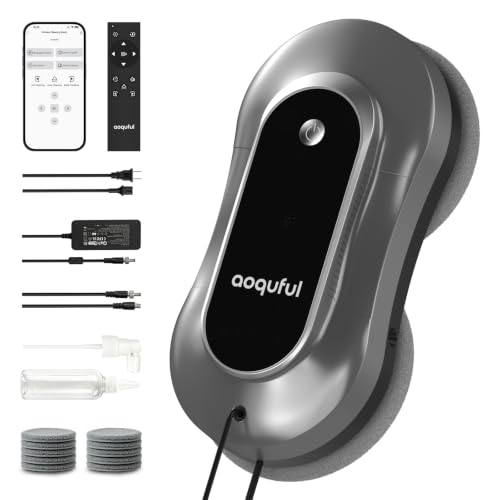
- AI navigation with spot cleaning and resume functions
- 6,400Pa suction with 20–30-minute UPS backup
- Includes 12 washable microfiber cloths
Best For: Multi-surface cleaning and targeted dirt removal
High-Coverage Pick

- 4800-6400Pa variable-frequency suction
- Dual ultrasonic spray with 85ml tank
- Three modes with edge detection
Best For: Larger glass surfaces and fewer refills
Smart Navigation Pick
BSD1 Automatic Window Cleaning Robot

- AI 5.0 path planning and edge detection
- Remote control with three automatic modes
- 3200Pa suction with UPS backup
Best For: Remote-guided cleaning of windows, mirrors, and doors
High-Rise Safety Pick

- Up to 6400Pa variable-frequency suction
- Backup battery and 178-inch safety rope
- Three modes, dual spray, and 10 replacement pads
Best For: High indoor or outdoor windows
Best All-Around Spray Coverage – WA9C Pro Window Cleaning Robot
For shoppers comparing window cleaning robots under 200, the WA9C Pro stands out for its four-nozzle spray system and multiple cleaning paths. It is designed for glass windows and includes remote control, edge cleaning, and safety features for high-window use.
Best For: Homeowners who want broad spray coverage and flexible control across windows, mirrors, and glass doors.
Pros:
- Four precision nozzles provide even moisture coverage.
- Offers N-shaped, Z-shaped, and manual cleaning modes.
- Includes drop sensing, suction monitoring, backup battery protection, and a safety rope.
Cons:
- The 25-minute backup battery is intended for power-loss protection rather than cordless cleaning.
- Requires a reliable anchor point for the safety rope during overhead use.
The WA9C Pro is a practical choice when spray performance and operating flexibility matter most. Its included replacement nozzles, cleaning mops, and remote add convenience for routine glass care.
Best for Large Glass – 6600 Pa Window Cleaning Robot
Among window cleaning robots under 200, this jet-black model emphasizes high suction and longer routine cleaning sessions with an 85 ml water tank. Its AI edge detection, dual spray, reusable pads, and 5-meter safety rope suit expansive or hard-to-reach glass.
Best For: Large windows, floor-to-ceiling glass, sliding doors, and balcony windows that need regular maintenance.
Pros:
- Up to 6600 Pa suction helps maintain a secure grip on smooth glass.
- AI edge detection supports N- and Z-shaped navigation on framed and compatible frameless glass.
- Includes an 85 ml tank, 10 replacement pads, a spray bottle, and a 5-meter safety rope.
Cons:
- Backup battery protection lasts up to 20 minutes during an outage.
- Designed for smooth glass and other flat surfaces, so compatibility should be checked before use.
This model is a strong fit for shoppers prioritizing suction, accessories, and reduced refill frequency. The remote and onboard controls also make it easier to adjust cleaning on larger surfaces.
Best for Surface Coverage – 5000 Pa Window Cleaning Robot
This window cleaning robot is an option for shoppers seeking window cleaning robots under 200 with planned route coverage and four-way water spraying. It combines 5000 Pa suction, edge detection, a backup power system, and three automatic cleaning paths for flat glass.
Best For: Users who want automated edge-to-edge path planning and damp cloth coverage for everyday glass grime.
Pros:
- Four-spray system helps keep the cleaning cloth damp.
- Z, N, and combined Z/N paths support broad surface coverage.
- Includes edge detection, UPS backup protection, and a safety rope.
Cons:
- The supplied notes do not specify the tank capacity or rope length.
- Its stated surface coverage is for flat glass surfaces, so other materials may require verification.
The 5000 Pa model makes the most sense for buyers focused on systematic coverage rather than maximum listed suction. Its remote and button controls keep operation straightforward for routine window cleaning.
Best for Tall Windows – TOSIMA W5 Window Cleaning Robot
For window cleaning robots under 200 intended for tall or hard-to-reach glass, the TOSIMA W5 combines 6400 Pa adaptive suction with bidirectional automatic spray. It supports large windows, mirrors, shower glass, and other compatible smooth surfaces.
Best For: Large, tall, inside, and outside windows where adaptive suction and a long safety rope are useful.
Pros:
- Adaptive suction monitors air pressure to support a stable grip.
- Bidirectional spray and dual rotating microfiber pads help loosen everyday dirt.
- Includes N- and Z-path modes, local cleaning, edge detection, and a 5-meter safety rope.
Cons:
- It must remain connected to its power adapter during operation.
- Initial backup-battery charging takes at least five hours.
- Concentrated cleaning solutions can clog the spray system.
The W5 is a compelling choice for expansive glass when adaptive suction and safety provisions are priorities. Follow the maintenance guidance by emptying and rinsing the tank after using cleaning solution.
Compact Smart Pick – ECOVACS WINBOT MINI
If you are comparing window cleaning robots under 200, the ECOVACS WINBOT MINI stands out for its compact footprint and automated glass cleaning features. Its 7,500Pa suction, backup battery protection, safety rope, intelligent path planning, and dual ultrasonic spray nozzles are designed to make routine window care more manageable. Supervision and proper safety precautions are still required.
Best For: Smaller windows, glass doors, and households wanting a compact robot with app control.
Pros:
- Compact 8.46-by-8.46-by-2.17-inch design suits tighter spaces.
- Dual ultrasonic nozzles help distribute a fine cleaning mist.
- Includes 7,500Pa suction, backup battery protection, and a safety rope.
- Offers intelligent path planning and three cleaning modes.
Cons:
- Designed for suitable smaller windows, so it may be less convenient for very large panes.
- Requires a properly prepared mopping pad and recommended cleaning solution.
- Safety rope attachment and supervision remain necessary during use.
The WINBOT MINI is a practical choice when compact size and layered safety features matter most. It is especially appealing for everyday maintenance in areas that are difficult to reach by hand.
Large-and-Small Window Choice – Tosima X1 Window Cleaning Robot
Among window cleaning robots under 200, the Tosima X1 is a versatile option for both large and small glass surfaces. It combines dual-nozzle ultrasonic water atomization with an 85 ml visible tank, automatic S-shaped cleaning, remote control, and a backup battery that keeps it attached for about 25 minutes during a power outage.
Best For: Homes with mixed-size windows, overhead glass, and users who want to monitor water levels easily.
Pros:
- 85 ml water tank has a viewing window for quick level checks.
- Dual nozzles spray in the direction of travel to help limit smearing.
- Automatic S-shaped cleaning works from top to bottom.
- Remote control allows manual direction adjustments and overhead cleaning.
Cons:
- Requires attachment of the safety tether to a fixed object.
- Recommended household operating temperature is limited to 0°C to 40°C.
- Its backup battery provides about 25 minutes during a power outage, rather than continuous operation.
The Tosima X1 makes a strong case for shoppers who need flexibility across different glass sizes. The visible tank and remote steering are useful practical touches for longer or more varied cleaning jobs.
Feature-Rich Cleaning Option – YW160S Window Cleaning Robot
For shoppers comparing window cleaning robots under 200, the YW160S emphasizes navigation, spot cleaning, and included accessories. Its AI path planning, dual water spray, 70 ml tank, remote control, 6,400Pa suction, UPS battery, and 12 washable microfiber cloths support cleaning windows, glass doors, tiles, and mirrors.
Best For: Users who want spot cleaning, resume functionality, and reusable cloths for multiple smooth surfaces.
Pros:
- AI navigation detects frames and obstacles while planning cleaning paths.
- Spot-cleaning and resume functions help address dirtier areas and interruptions.
- Includes 12 washable microfiber cloths for repeated use.
- Triple safety features include edge detection, 6,400Pa suction, and a UPS battery rated for 20–30 minutes during outages.
Cons:
- The listed 6.2-pound weight and larger 13.78-by-11.02-by-4.72-inch dimensions may feel less compact.
- Operation is corded electric and uses a remote control rather than app control.
- Its 70 ml tank is smaller than the Tosima X1’s 85 ml tank.
The YW160S is geared toward buyers who value control features and included cleaning supplies over a minimalist design. Its spot mode, resume function, and broad surface recommendations make it a flexible household tool.
High-Coverage Pick – X1 Window Cleaning Robot
If you are comparing window cleaning robots under 200, the X1 stands out for its large 85ml tank, dual ultrasonic spray, and variable-frequency suction. It is designed to handle routine glass cleaning with three cleaning modes and automatic edge detection.
Best For: Shoppers who want strong suction and less frequent refilling for larger glass surfaces.
Pros:
- Variable-frequency suction ranges from 4800Pa to 6400Pa for a secure hold and deeper cleaning.
- Dual ultrasonic spray applies water twice per movement for broad, even coverage.
- Air-pressure sensing and AI edge detection support anti-drop protection and safer operation.
Cons:
- The product notes list limited item dimensions, so its physical size is not clear.
- It is described as battery powered, but the supplied information does not specify runtime in normal cleaning use.
The X1 is a feature-rich option for buyers prioritizing suction strength, spray coverage, and a visible high-capacity tank. Confirm the included accessories and operating instructions before tackling challenging surfaces.
Smart Navigation Pick – BSD1 Automatic Window Cleaning Robot
Among window cleaning robots under 200, the BSD1 is a practical choice if you value guided navigation and remote control. Its AI 5.0 path planning, dual spray nozzles, and three automatic modes are aimed at systematic cleaning of windows, mirrors, and doors.
Best For: Users who want remote-controlled cleaning modes and automatic route planning for common glass surfaces.
Pros:
- AI 5.0 path planning and edge detection help the robot navigate frames and obstacles.
- Dual water nozzles, double-helix cleaning heads, and microfiber pads target dust, fingerprints, and smudges.
- A 3200Pa vacuum, UPS power storage for up to 30 minutes, and safety rope provide layered protection.
Cons:
- Its 3200Pa suction rating is lower than some higher-suction models.
- The supplied notes do not state the tank capacity or the number of replacement pads included.
The BSD1 offers a balanced mix of navigation assistance, cleaning controls, and safety features. It may suit routine maintenance, while buyers with especially stubborn buildup may prefer a model with a higher stated suction rating.
High-Rise Safety Pick – Updated 6400Pa Window Robot
For shoppers comparing window cleaning robots under 200 for hard-to-reach glass, this updated model emphasizes safety and reach. It combines up to 6400Pa variable-frequency suction, dual-direction spray, navigation features, and a 178-inch safety rope.
Best For: Indoor or outdoor high windows where backup power, anti-drop protection, and a long safety rope matter.
Pros:
- Variable-frequency suction up to 6400Pa adapts to different dirt levels and glass surfaces.
- Triple safety features include a backup battery, air-pressure sensor, and 178-inch safety rope with hook.
- Quick, deep, and spot modes pair with dual-direction spray and edge-and-corner detection.
- Includes 10 replacement microfiber mop pads for ongoing maintenance.
Cons:
- The notes give conflicting tank figures of 85ml and 90ml.
- Users must dampen pads to 50%-70% and pre-apply solution to the glass rather than pour it into the machine.
This model is especially compelling for high or exterior windows because its safety system includes both backup power and a long tether. Its preparation requirements are worth noting, but the included replacement pads add practical value.
How We Picked the Best Window Cleaning Robots Under 200
We focused on the features that matter most in everyday glass cleaning: suction strength, spray coverage, navigation, edge handling, safety systems, control options, and ease of maintenance. We also considered whether each robot appears better suited to small panes, large windows, framed glass, or routine indoor cleaning.
Specifications such as 4,800Pa, 6,400Pa, or 6,600Pa suction can help indicate holding power, but they do not guarantee performance on every surface. Window texture, moisture, frame design, and the condition of the cleaning pad all affect results. Models with multiple safety layers, backup power, a tether, and clear status alerts receive extra consideration because dependable attachment is essential.
Quick Comparison
| Feature | What to look for |
|---|---|
| Suction | Higher ratings may help with heavier pads, larger panes, or textured glass, but real-world stability matters more than the number alone. |
| Spray system | Dual, triple, or ultrasonic spray can improve coverage and reduce manual pre-wetting. |
| Navigation | Smart path planning and edge detection help create more consistent coverage. |
| Controls | Remote controls are simple; app control may provide more settings and status information. |
| Safety | Look for an emergency battery, anti-drop protection, a safety rope, and reliable obstacle or edge detection. |
Key Buying Factors for Window Cleaning Robots Under 200
Window Compatibility
Confirm the robot is designed for your glass type and pane size. Most models work best on smooth, flat windows. Framed windows, narrow panes, heavily soiled surfaces, and exterior glass may require closer supervision or manual finishing.
Suction and Cleaning Performance
Choose stronger suction when you have larger panes or want the robot to maintain contact through a damp cleaning cycle. However, suction does not replace preparation: remove loose dirt first, use the recommended pad, and avoid over-wetting the glass.
Spray and Water-Tank Design
Automatic spray reduces interruptions, while a visible tank makes it easier to monitor water use. Ultrasonic systems may create a finer mist, but tank capacity, nozzle reliability, and pad absorbency are equally important.
Safety and Maintenance
Prioritize layered protection rather than one headline feature. A tether, backup battery, anti-drop detection, and clear alerts are valuable when cleaning upper-floor or exterior windows. Wash or replace pads regularly, keep sensors clear, and follow the manufacturer’s instructions for solution use.
Who Should Buy Which Window Cleaning Robots Under 200?
Choose a compact model if you mainly clean smaller panes or have limited storage space. A higher-suction option is a better fit for large, smooth windows and longer cleaning sessions. Models with dual or ultrasonic spray are convenient for users who want less manual preparation, while smart navigation and edge detection appeal to buyers seeking more consistent coverage.
If you have delicate, heavily textured, unusually shaped, or poorly framed glass, a robot may not be the right primary tool. For everyone else, the best choice among these Window Cleaning Robots Under 200 is the model that matches your pane size, spray preferences, control method, and safety requirements—not simply the one with the highest suction number.